 Open 24 hours · 7 days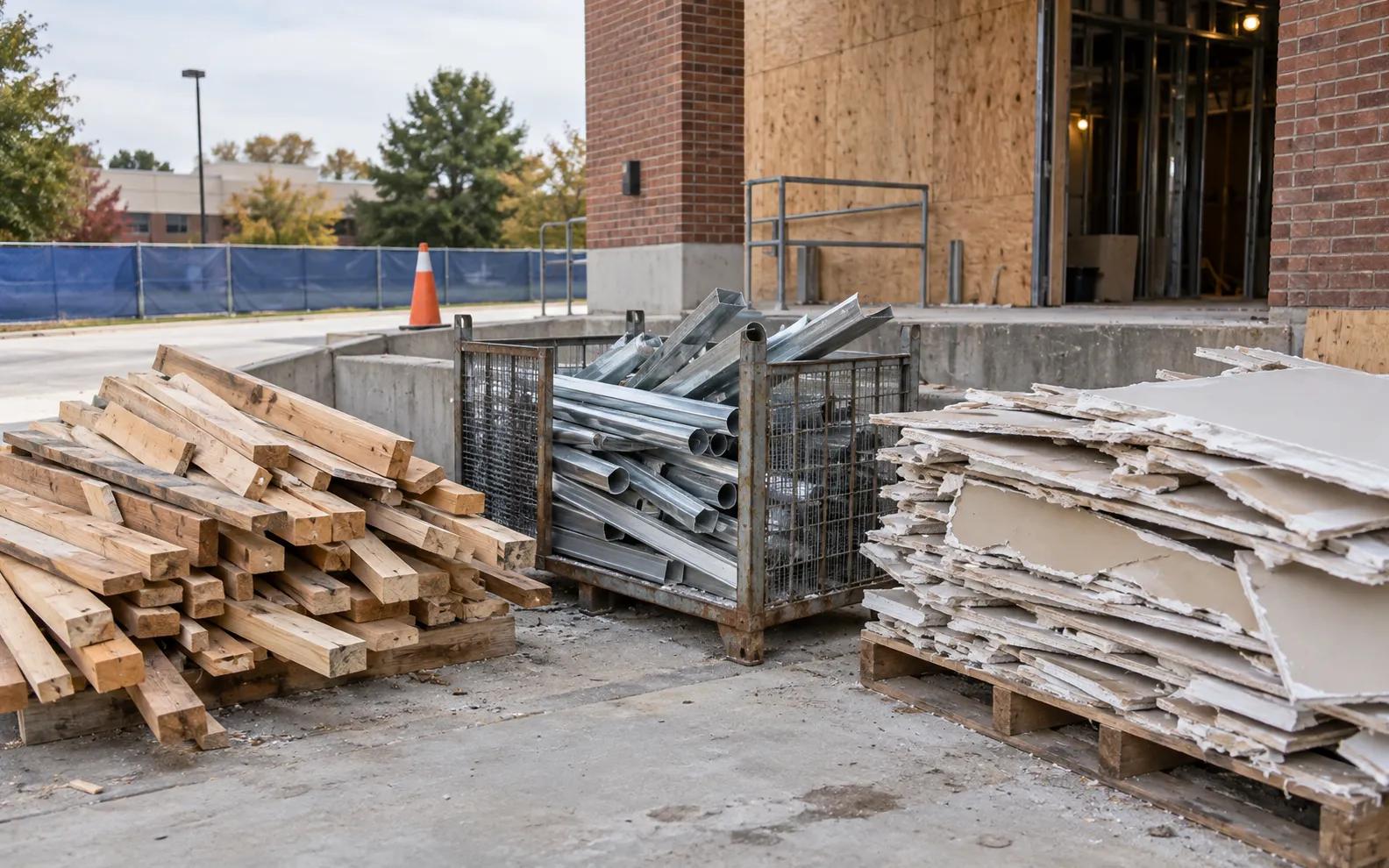
Construction and renovation debris is easier to estimate and route when wood, metal, drywall, masonry, reusable fixtures, packaging, and questionable material are identified before loading. Do not create a mystery pile.
Use this material decision table
| Material | How to stage it | What to check |
|---|---|---|
| Clean wood | Stack stable pieces; remove protruding fasteners when the responsible trade can do so safely | Paint, treatment, rot, contamination, reuse potential |
| Metal | Separate from mixed debris | Sharp edges, attached materials, scrap acceptance |
| Drywall | Keep dry and separate when possible | Age of building, contamination, local facility rules |
| Brick, block, concrete | Estimate dimensions and density, not only pile volume | Weight limits and facility acceptance |
| Doors, cabinets, fixtures | Set aside intact pieces before demolition damage | Reuse, donation, hardware, attachment status |
| Cardboard and packaging | Flatten and keep clean | Food, foam, plastic wrap, and contamination |
| Unknown or regulated material | Stop; isolate without disturbing | Qualified assessment and approved disposal route |
Keep reuse decisions upstream
The U.S. Environmental Protection Agency describes doors, hardware, appliances, fixtures, wood, brick, concrete, and metals as materials that may have reuse or recycling paths. Those paths are easier to preserve before material is broken, wet, or mixed. Identify salvage candidates during the walkthrough, not after they land in a debris pile.
Reuse is not automatic. Condition, contamination, local demand, transport, and the receiving organization’s rules all matter. Get acceptance before scheduling a separate delivery or treating potential donation as a disposal plan.
Weight can matter before volume
A truck or container can look half empty and still be at its safe weight limit when it holds concrete, soil, brick, tile, or other dense material. Estimate dimensions and material type. Do not compare a cubic yard of broken concrete with a cubic yard of cardboard as if they create the same load.
Material that should stop general hauling
Suspected asbestos, lead-contaminated debris, chemicals, solvents, fuel, pressurized cylinders, fluorescent lamps, unknown powders, biomedical material, and contaminated soil need specific review. Building age and project history may provide clues, but visual inspection alone cannot clear a material. Do not break, sweep, bag, or transport suspected hazardous material based on a web article.
Chesterfield County’s convenience centers currently do not accept asbestos or lead in construction and demolition debris. The county also limits residential and registered small-contractor loads and requires proof tied to residential work. A commercial project should confirm the correct permitted facility instead of assuming the resident rules apply.
Stage a pickup without creating a new hazard
- Keep exits, stairs, sidewalks, fire equipment, and electrical panels clear.
- Use stable stacks. Do not lean large sheets where they can fall.
- Keep sharp material contained and visible.
- Protect dry material from rain when moisture changes handling or disposal.
- Leave room for carts and dollies. A packed corner can be harder to clear than the same material in an open bay.
- Share photos after staging so the visible load matches the scope discussion.
For a reviewed pickup, see construction debris hauling in Chester. If regulated material is suspected, arrange qualified assessment before calling for ordinary removal.
Sources
U.S. EPA, Sustainable Management of Construction and Demolition Materials, and Chesterfield County Convenience Centers, accessed September 21, 2026. Local acceptance, eligibility, and fees change; confirm the rule that applies to the project and generator.